Table of Contents
ToggleFitting a comfortable couch into a small living room doesn’t mean sacrificing style or function, it just means shopping smarter. Whether you’re furnishing a city apartment, a basement den, or a bonus room, the right small couch can anchor your space without overwhelming it. With rising housing costs and shrinking square footage, compact seating has evolved far beyond dorm-room futons. Today’s small couches for living room spaces blend clever engineering, durable materials, and design flexibility to deliver full-sized comfort in a pint-sized footprint. This guide walks through the practical considerations, measurements, and layout strategies that’ll help you choose and place a small sofa that actually works for how you live.
Key Takeaways
- A small couch for living room spaces preserves essential circulation by maintaining 36 inches of walking clearance while improving visual balance and natural light flow in compact rooms.
- Prioritize frame construction using kiln-dried hardwood with mortise-and-tenon joints and high-resilience foam (2.0 lbs/cubic foot or higher) to ensure durability and long-term comfort in a small couch.
- Loveseats (52–64 inches) and apartment sofas (68–80 inches) with exposed legs and track arms maximize seating efficiency while making rooms feel larger compared to skirted, oversized sectionals.
- Measure your room’s walkways, doorways, and pathways to ensure 32–36 inches of clearance for delivery and daily movement before selecting a small couch.
- Float your small couch inches from the wall, anchor it with an area rug, and position furniture perpendicular to windows to create depth and functional conversation zones in tight quarters.
- Modular and convertible small couches with pull-out sleepers or removable ottomans multiply functionality, offering flexible seating solutions that adapt as your living room layout evolves.
Why Choose a Small Couch for Your Living Room?
A couch for small living room setups solves several challenges at once. First, it preserves circulation space, essential in rooms under 200 square feet where every pathway matters. Building codes typically don’t dictate living room furniture clearances, but ergonomic best practice calls for 36 inches of walking space around seating areas. A compact sofa keeps that breathing room intact.
Small sofas also shift the visual weight in tight quarters. An oversized sectional can make a 10×12 room feel like a furniture showroom: a loveseat or apartment-sized sofa keeps proportions balanced and sightlines open. This matters for natural light, too, bulky furniture blocks windows and creates shadowy corners.
Finally, portability counts. Most small living room couches weigh 80–150 pounds and fit through standard 32-inch doorways without disassembly. If you’re a renter, move frequently, or live in a walk-up, that ease of transport is worth its weight in avoided chiropractor bills. And because smaller frames use less upholstery and structural lumber, they often cost 20–40% less than full-sized counterparts, budget savings you can roll into better fabric or a higher-density foam core.
Key Features to Look for in a Small Living Room Couch
Not all compact couches are created equal. Start with frame construction. Kiln-dried hardwood (oak, maple, or birch) and engineered wood joints, mortise-and-tenon or corner blocks, outlast stapled particleboard by years. Lift the couch: if it feels flimsy or creaks, walk away.
Cushion density matters more in a small sofa because there’s less frame to distribute weight. Look for high-resilience (HR) foam rated at 2.0 pounds per cubic foot or higher, or an eight-way hand-tied spring system if budget allows. Avoid all-polyester fill: it compresses into lumps within months.
Measure the seat depth before you buy. Standard sofas run 38–40 inches deep: small couches often clock in at 32–36 inches. If the seat’s too shallow, taller users feel perched: too deep, and shorter folks lose lumbar support. Sit for at least five minutes in the showroom, your lower back will tell you what the spec sheet won’t.
Consider modular or convertible designs. Some small sofas for living room use include pull-out sleepers, fold-down armrests, or removable ottomans that double as extra seating. These aren’t gimmicks when space is tight: they’re force multipliers. Just verify the mechanism: cheap sleeper hardware binds after a dozen uses.
Finally, check leg clearance. Couches with exposed legs (4–6 inches high) create visual space underneath, making the room feel larger. Skirted models touch the floor and visually shrink the area. If you have radiant floor heating or plan to use a robot vacuum, exposed legs are non-negotiable.
Best Small Couch Styles for Compact Spaces
Loveseats and Apartment Sofas
Loveseats typically measure 52–64 inches wide and seat two adults comfortably. They’re the go-to for studios and narrow living rooms where a full three-seat sofa would block the TV or crowd a coffee table. Apartment sofas split the difference at 68–80 inches, still compact, but with room for a third person or a sprawled-out nap.
Both styles work well in front of windows or flanking a fireplace. Pair a loveseat with a couple of armchairs to create flexible seating that’s easy to rearrange for game night or when company arrives. Many apartment-friendly layouts feature this modular approach because it scales with changing needs.
When shopping, pay attention to arm style. Track arms (straight, boxy) add 6–8 inches to overall width compared to English roll arms but maximize seating surface. If you’re tight on inches, every bit counts, track or low-profile arms deliver more usable cushion per linear foot.
Sectionals and Modular Options
Yes, sectionals can work in small spaces, if you choose wisely. Look for two- or three-piece modular sectionals with individual seats under 36 inches wide. These can be reconfigured into an L-shape, separated into a sofa-plus-chair combo, or even lined up straight against a wall.
Right-angle sectionals with a chaise (often called “apartment sectionals”) fit snugly into corners, turning dead space into a lounging zone. Total footprint rarely exceeds 76×76 inches, comparable to a standard sofa with an ottoman. The chaise gives you a place to stretch out without adding a separate recliner.
Modular designs also let you expand later. Buy a two-seater now: add an armless middle module or corner wedge when you move to a bigger place. That future-proofing appeals to DIYers who prefer incremental investment over one-time splurges.
One caution: check the connector hardware. Cheap sectionals use plastic clips that crack: quality units use metal brackets or interlocking plates that you secure with an Allen wrench or hex bolt. If it wobbles in the showroom, it’ll only get worse at home.
How to Measure Your Living Room for the Perfect Small Couch
Grab a 25-foot tape measure, a notepad, and a helper if possible. Start by recording the room’s length and width at the baseboard level, not at eye height, where walls may bow in older homes.
Next, map out obstructions: doorways, radiators, floor vents, outlets, and light switches. Note the swing radius of doors (most interior doors need about 30 inches of clearance). If a couch blocks a door from opening fully, you’ve just created a fire-code headache and a daily annoyance.
Measure the pathway from your front door to the living room, including stairwell width, landing depth, and any tight turns. The delivery team needs at least 32 inches of clearance: 36 inches is safer. If your building has an elevator, measure the cab interior and door opening. Many creative furniture hacks exist for tight spaces, but a couch wedged in a stairwell isn’t one of them.
Now measure your existing focal points: TV stand, fireplace, or windows. A common rule of thumb is to position the couch so viewers sit 8–10 feet from a TV screen (adjust for screen size, bigger panels tolerate greater distances). For a fireplace, leave at least 3 feet between the hearth and the nearest seat cushion to avoid radiant-heat discomfort and meet fire-safety guidance.
Finally, use painter’s tape to outline the couch’s footprint on the floor. Live with that tape for a day or two. Walk the room, open drawers, vacuum, does the layout still feel functional? If you’re constantly stepping over the tape, the couch is too big or positioned wrong.
Placement and Layout Tips to Maximize Your Small Living Room
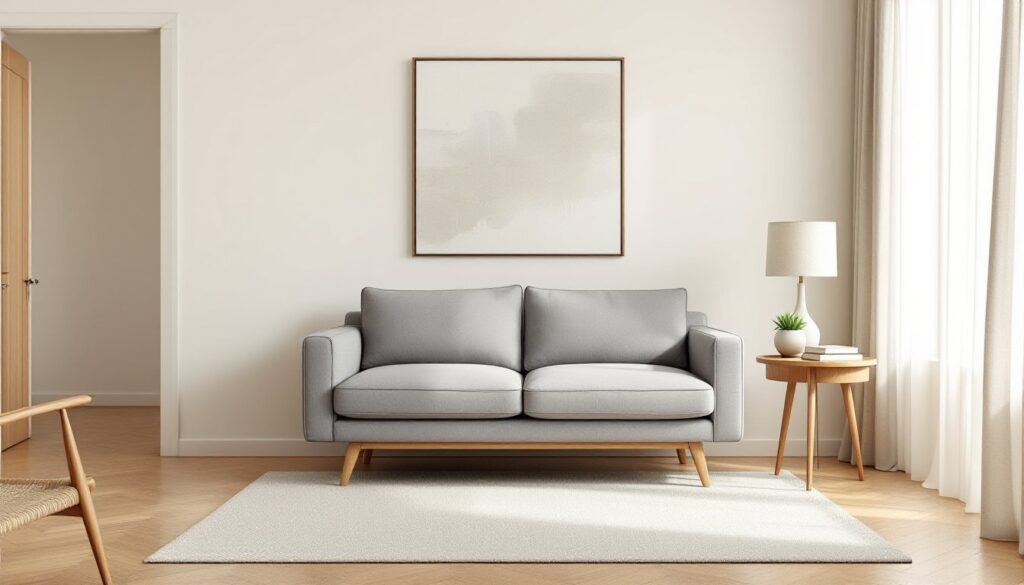
Float the couch a few inches away from the wall. Counter-intuitive, but it works: a small gap behind the sofa for small living room settings creates visual depth and lets you tuck a narrow console table for lamps or storage. You’ll also avoid scuffing the paint and trapping dust bunnies.
Anchor with an area rug. A rug that extends 6–12 inches beyond the couch on all sides unifies the seating area and tricks the eye into perceiving a larger footprint. Make sure at least the front legs of the couch rest on the rug: floating all furniture off a tiny rug makes the space look disjointed.
Create conversation zones rather than lining everything against the walls. Place the couch perpendicular to a window, add a pair of lightweight accent chairs at an angle, and suddenly you have a layout that invites interaction instead of a waiting-room vibe. Many interior design portfolios showcase this diagonal approach in compact living rooms.
Use vertical space. Mount your TV, install floating shelves above the couch, or hang artwork higher than standard gallery height (60-inch center line). Drawing the eye upward makes low ceilings feel taller and distracts from the room’s small footprint.
Limit the coffee table. In a really tight space, swap a traditional coffee table for a narrow bench, a pair of nesting tables, or even a large ottoman with a tray. You’ll preserve the walk-through path and gain flexibility for guests.
Mind the sightlines. Sit on the couch and look around: can you see out the window? Is the TV at a comfortable angle? Does the couch back block a hallway view or natural light? Small couches for living room layouts should enhance flow, not choke it. If something feels off, try rotating the piece 90 degrees or swapping its position with another element before you commit.
One pro trick: photograph the room from the doorway and again from each corner. Your phone’s wide-angle lens exaggerates space, but comparing before-and-after shots reveals whether the new couch actually improves the layout or just fills a void.