Table of Contents
ToggleA grey couch isn’t a safe fallback, it’s a design anchor. Whether it’s a charcoal sectional or a light gray sofa, this neutral workhorse adapts to nearly every aesthetic without locking you into a single look. The trick is treating it as a foundation, not the finish line. Homeowners often bring home a grey sofa and then stall out, unsure how to layer color, texture, and personality around it. This guide covers fifteen practical approaches to styling a grey couch living room, from color pairings and fabric layering to furniture placement and accessory choices that make the space feel intentional.
Key Takeaways
- Grey couches function as a versatile design anchor that adapt to multiple aesthetics, working well with both warm earth tones and cool modern palettes depending on your preferred living room style.
- Layer textures through throw pillows, blankets, rugs, and fabrics—mixing linen, velvet, performance fabrics, and knits—to add depth and prevent a flat, monotonous grey couch living room.
- Select an 8×10 to 9×12 rug with enough contrast to the sofa and position a coffee table at roughly two-thirds the couch’s length to ground the furniture and define the functional zone.
- A grey sofa pairs naturally with warm accents like rust, terracotta, and walnut wood for a cozy space, or cool tones like navy and emerald for a modern, sophisticated aesthetic.
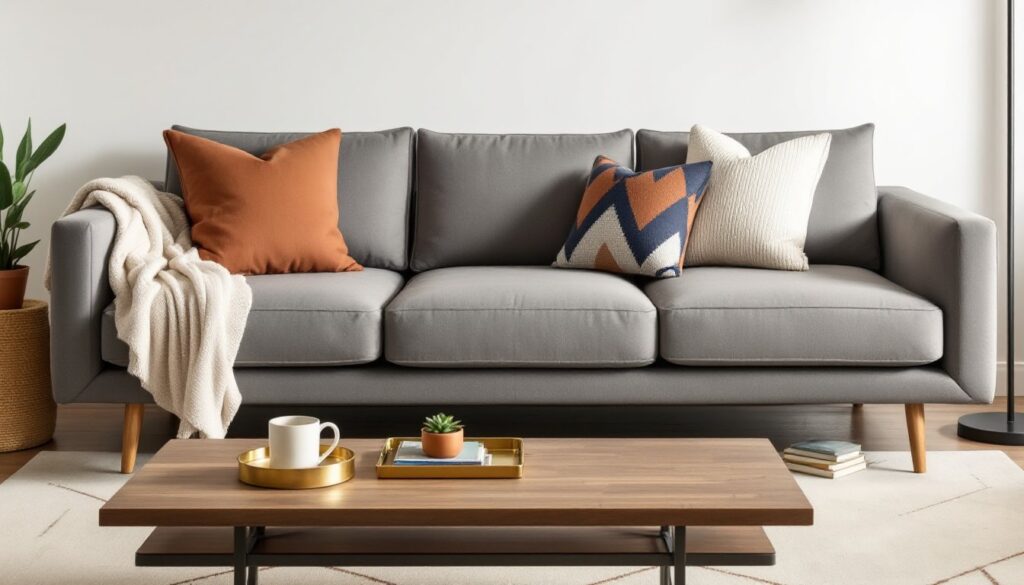
- Style throw pillows in odd numbers (three to five for a standard sofa) by combining one or two solid anchor pillows, one patterned pillow, and one textured neutral to avoid a visually flat matched-set look.
- Swap pillows and throws seasonally and keep the coffee table surface at least half clear to maintain intentionality and ensure your grey couch living room remains functional and inviting.
Why Grey Couches Are Perfect for Versatile Living Room Design
Grey falls somewhere between warm and cool on the color spectrum, which means it plays well with both ends. A charcoal grey couch grounds bold accent colors without competing. A light grey couch brightens smaller rooms and reflects natural light better than darker upholstery.
Unlike beige, which skews traditional, or white, which shows every spill, grey maintains a clean look while hiding minor wear. It works in rentals where walls can’t be painted, in open-plan homes where the living room bleeds into the kitchen, and in spaces where the homeowner’s taste shifts seasonally. The fabric matters more than the shade, linen, velvet, performance fabric, and leather all behave differently under use and require different care, but the color itself stays flexible.
Grey also photographs well, which matters if resale or listing photos are on the horizon. It reads as updated without trending, and it doesn’t date the way jewel tones or heavily patterned upholstery can. For DIYers testing out accent walls, new rugs, or gallery walls, a grey sofa won’t clash with the experiments.
Color Palettes That Complement a Grey Sofa
Grey couches pair with nearly any palette, but the undertone of the grey, warm (greige, taupe-leaning) or cool (blue-grey, slate), affects which accent colors sing and which fall flat.
Warm Accents for a Cozy, Inviting Space
If the goal is comfort and approachability, layer warm neutrals and earth tones around the grey sofa. Think camel, rust, terracotta, mustard, and burnt orange. These shades add heat without overwhelming the room.
Wood tones matter here. Walnut, oak, and cherry coffee tables or side tables warm up a grey couch living room. Brass or matte gold hardware on furniture and light fixtures amplifies the cozy effect. Avoid cool metals like chrome or brushed nickel in a warm palette, they’ll clash with the mood.
Paint choices: Warm whites like Benjamin Moore Swiss Coffee or soft taupes on the walls prevent the grey from reading cold. If painting an accent wall, earthy greens (sage, olive) or warm terracottas frame a grey sofa without competing.
Cool Tones for a Modern, Sophisticated Look
For a sharper, more contemporary vibe, lean into cool blues, greens, and monochromatic greys. Navy, slate blue, emerald, and teal create contrast without warmth. This palette works well in homes with modern minimalist design elements or Scandinavian-inspired interiors.
Black accents, picture frames, light fixtures, table legs, add definition. Crisp white trim and walls keep the space from feeling too heavy. A cool grey couch pairs naturally with concrete, stone, and matte black metal.
Artwork and textiles in this palette should avoid warm undertones. Choose prints with blues, greys, and whites rather than beiges or creams. If adding plants, stick to varieties with cooler foliage tones like eucalyptus or succulents rather than warm-toned tropicals.
Textures and Fabrics to Layer With Your Grey Couch
A single-texture room feels flat, especially when the dominant piece is a solid grey. Mixing materials adds depth without requiring bold color.
Start with the couch fabric itself. Linen is casual and breathes well but wrinkles easily. Velvet adds richness and works in formal or eclectic spaces. Performance fabrics (like those treated with stain resistance) suit high-traffic homes with kids or pets, they mimic linen or cotton but clean up more easily.
Next, layer in contrasting textures through throw blankets and accent pillows. Pair a smooth leather couch with chunky knit throws or linen pillows. If the sofa is already plush velvet, balance it with woven jute, canvas, or crisp cotton accents. Avoid matching every textile, variety is the point.
Rugs add another texture layer. A wool or wool-blend rug softens hard flooring and muffles sound. Jute or sisal works in casual spaces but feels scratchy underfoot, layer a softer rug on top if seating extends to the floor. Avoid shag or deep-pile rugs under coffee tables: crumbs and debris settle in the fibers and vacuuming becomes a chore.
Window treatments matter, too. Linen or cotton curtains soften walls and absorb sound. If privacy isn’t a concern, consider leaving windows bare to maximize natural light, grey couches don’t need as much warmth from textiles when sunlight does the work.
Styling Your Grey Sofa With Throw Pillows and Blankets
Pillows and throws are the fastest, least permanent way to shift the mood of a grey couch living room. They’re also where most people overthink it.
Pillow count and size: For a standard three-seat sofa, three to five pillows is plenty. Use a mix of sizes, 22-inch square pillows in back, 18-inch or lumbar pillows in front. Odd numbers look more natural than even. Oversized sectionals can handle more, but avoid lining them up like soldiers. Cluster pillows in corners and let some lean.
Fabric and pattern mixing: Start with one or two solid pillows that anchor the palette, these can match your accent color (rust, navy, emerald). Add one patterned pillow, stripes, geometric prints, or florals, that incorporates both the solid accent color and a secondary tone. Finish with a textured neutral (linen, cable knit, faux fur) in cream, white, or a lighter grey.
Avoid matching pillow sets sold as a bundle. They’re visually flat. Instead, source pillows separately or mix covers from different retailers.
Throws: Drape one throw blanket over the arm or back of the sofa, not spread flat across the cushions. Choose a material that contrasts the couch, chunky knit on smooth fabric, lightweight linen on velvet. The throw’s color should either match a pillow or pull from the rug or artwork. Keep a second throw folded in a nearby basket for actual use, draping one that’s constantly in use leads to a rumpled look.
Swap out pillows and throws seasonally if desired. Warmer textures and deeper colors in fall and winter: lighter linens and pastels in spring and summer. This doesn’t require a full redesign, just a few strategic decor swaps keep the room from feeling stale.
Choosing the Right Rug and Coffee Table
A grey sofa needs grounding, and that’s where the rug and coffee table come in. These two elements define the functional zone and either amplify or undercut the couch’s impact.
Rug size and placement: The rug should be large enough that at least the front legs of the sofa rest on it. For a standard living room, that’s typically an 8×10-foot or 9×12-foot rug. Undersized rugs make furniture look like it’s floating. If budget’s tight, prioritize size over material, a larger, simpler rug beats a small, expensive one.
Rug color and pattern: Light grey couches pair well with patterned rugs in warm or cool tones, depending on the palette. A geometric or striped rug adds energy: a subtle tonal rug keeps things calm. Dark grey couches benefit from lighter rugs to avoid a cave-like feel. Avoid matching the rug too closely to the sofa, there should be contrast.
Material: Wool or wool-blend rugs are durable, easy to vacuum, and work in high-traffic areas. Natural fiber rugs (jute, sisal, seagrass) suit casual spaces but can be rough underfoot. Synthetic rugs resist stains and cost less but may flatten over time. Hand-tufted or hand-knotted wool rugs hold up best long-term but cost more upfront.
Coffee table style and scale: The coffee table should be roughly two-thirds the length of the sofa and sit about 18 inches away from the front edge, close enough to reach, far enough to walk past comfortably. Height should match or sit slightly below the sofa seat cushions, typically 16 to 18 inches.
For material and finish, wood tones (oak, walnut, reclaimed pine) warm up grey sofas. Glass or acrylic tables keep sightlines open in smaller rooms. Metal-frame tables with wood or stone tops suit industrial or modern spaces. Avoid overly ornate tables, grey couches lean contemporary, and a fussy table fights that.
If the room lacks storage, consider a coffee table with a lower shelf or a lift-top design. These add function without requiring additional furniture. For homes with young kids, rounded corners and sturdy construction trump aesthetics, solid wood or metal frames outlast particleboard and won’t tip.
Finally, style the coffee table with intention. A short stack of books, a small tray, and one organic element (a plant, a bowl, a sculptural object) is enough. Overcrowding the surface defeats its purpose. Leave at least half the tabletop clear for actual use, drinks, remotes, feet.
A well-chosen rug and coffee table don’t just complement a grey sofa, they define the room’s function and flow. Get these two pieces right, and the rest of the living room design falls into place with less effort.