Table of Contents
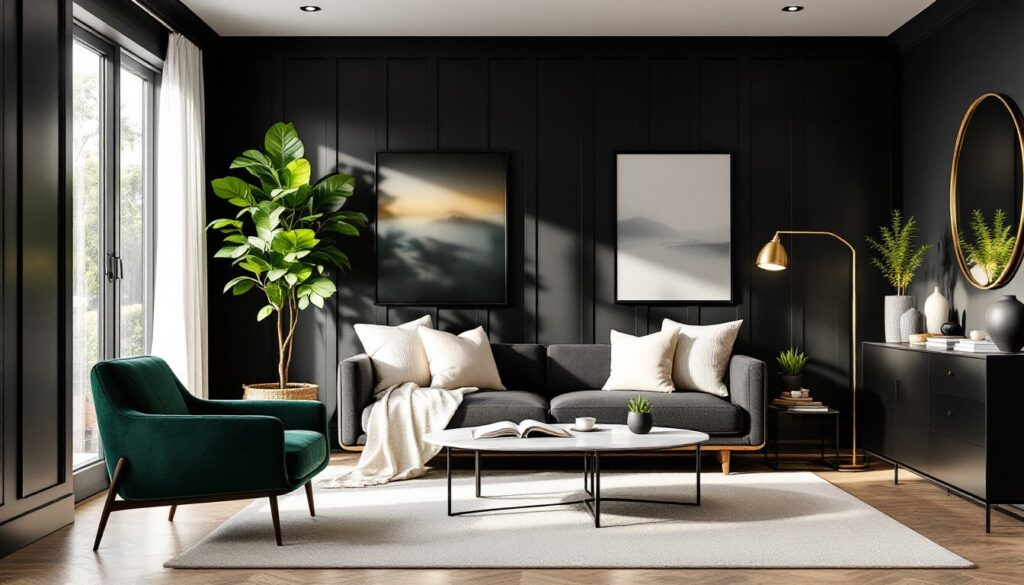
ToggleA black living room isn’t a safe choice, and that’s exactly why it works. When done right, black transforms a standard room into a space with depth, drama, and architectural presence. It absorbs light in ways that make other colors pop, highlights texture better than any neutral, and forces you to think deliberately about every material and finish you bring into the room. Whether you’re committing to all black living room ideas or layering black walls with warm wood and metal accents, the result is a modern living room that feels intentional and bold. This guide walks through practical strategies for color pairing, wall treatments, furniture selection, lighting, and texture, so you can design a luxury black living room that’s striking without feeling cave-like.
Key Takeaways
- Black living room ideas create visual impact and depth by transforming neutral spaces into bold, intentional designs that highlight textures, art, and architectural details.
- Layer multiple light sources—ambient, task, and accent lighting—with LED bulbs at 2700K–3000K to prevent a black living room from feeling dim and uninviting.
- Balance black walls with warm metals (brass, copper), natural wood tones, jewel-tone upholstery, and varied textures like velvet, linen, and leather to avoid a flat, one-dimensional appearance.
- Use accent walls, black furniture with visible legs, and glass or metal accents to maintain visual breathing room and prevent the space from feeling too heavy.
- Black hides imperfections better than lighter neutrals, making it a practical and forgiving choice for high-traffic living areas with kids and pets.
- Incorporate mirrors, plants, and natural materials strategically to amplify light and add organic warmth that softens black’s architectural edge.
Why Choose a Black Living Room?
Black delivers visual impact that lighter neutrals can’t match. It creates a backdrop that makes art, lighting, and architectural details stand out instead of blending into the walls. In open-plan homes, a black living room can anchor a space and define zones without adding physical dividers.
Black also hides imperfections. Minor wall flaws, uneven paint coverage, and scuff marks are far less visible on dark surfaces than on white or beige. This makes black a surprisingly forgiving choice for high-traffic living areas or homes with kids and pets.
From a design perspective, black works across styles. Modern black living room ideas lean on clean lines and monochrome palettes, while traditional spaces use black as a grounding contrast to warm wood, brass, and rich upholstery. It’s versatile enough to support minimalist, industrial, mid-century, or even maximalist aesthetics.
There are practical trade-offs. Black absorbs light, so rooms with limited natural light require deliberate lighting design. Touch-up paint can be tricky, black shows sheen differences more than lighter colors, so keeping leftover paint for repairs is essential. And black radiates heat in sunlit rooms, which may affect HVAC load during warmer months.
Best Black Color Palettes and Accent Combinations
Black isn’t one color, it’s a family of undertones. Warm blacks (with brown or red undertones) pair well with brass, walnut, and terracotta. Cool blacks (blue or gray undertones) complement chrome, white oak, and concrete. Test samples on your wall in natural and artificial light before committing: undertones shift dramatically depending on the light source.
Monochrome schemes use black with white and gray for a high-contrast, graphic look. This approach works well in modern black living room ideas, especially when paired with matte black walls, white trim, and charcoal furniture. Add texture through materials, think linen, wool, and matte ceramic, to keep the space from feeling flat.
Warm metallics like brass, copper, and gold create luxury black living room vibes. These finishes catch light and provide warmth that balances black’s coolness. Use them in lighting fixtures, cabinet hardware, mirror frames, and side table legs. Avoid mixing too many metal finishes in one room: stick to one or two for cohesion.
Jewel tones add richness without overwhelming the palette. Deep emerald, sapphire, burgundy, and burnt orange work especially well in upholstery, throw pillows, and area rugs. These colors have enough saturation to hold their own against black without creating jarring contrast. For a bolder take on dark interior aesthetics, layer multiple jewel tones in varying textures.
Natural wood tones soften black’s edge. Light woods like white oak and ash provide contrast, while darker woods like walnut and mahogany create a more enveloping, moody effect. Use wood in flooring, furniture, ceiling beams, or accent walls to bring warmth and organic texture into the space.
Black Walls: Paint, Wallpaper, and Paneling Options
Paint is the most straightforward option. Use a high-quality primer (gray-tinted primer works better under black than white) and plan for two coats minimum. Sheen matters: matte or eggshell finishes hide wall imperfections and create a velvety look, while satin or semi-gloss reflects more light and makes small rooms feel slightly larger. Matte shows scuffs more easily but can be touched up: gloss is more durable but reveals surface flaws.
Paint coverage for black typically runs around 350–400 square feet per gallon depending on the product and application method. For a standard 12×15-foot living room with 8-foot ceilings, budget two gallons for two coats, plus extra for touch-ups. Stir paint thoroughly and use consistent roller pressure to avoid sheen variation.
Wallpaper adds pattern and texture without additional work. Black wallpapers with subtle metallic prints, geometric patterns, or textured finishes (like grasscloth or linen-look) introduce depth that flat paint can’t achieve. Install over properly prepped walls, any bumps or gaps will telegraph through. Use a quality wallpaper adhesive rated for the paper weight, and smooth out bubbles with a plastic smoothing tool as you go.
Paneling creates architectural interest. Board-and-batten, shiplap, or picture frame molding painted black adds dimension and breaks up large wall expanses. This approach works especially well in period homes or spaces aiming for a traditional luxury black living room feel, as highlighted in period renovations with bold black walls. Install blocking or furring strips if attaching paneling over drywall to ensure a solid nailing surface.
Accent walls are a lower-risk entry point. Paint one wall black (typically the wall behind the sofa or fireplace) and leave the others in a lighter neutral. This approach maintains brightness while delivering visual impact. Ensure consistent lighting across the room so the accent wall doesn’t create a shadowy corner.
Black Furniture and Statement Pieces
Sofas and sectionals in black leather or fabric anchor the room. Leather develops a patina over time and is easier to clean than most upholstery fabrics, making it practical for families. Fabric options like velvet or bouclé add softness and texture. Choose a sofa with exposed wood or metal legs rather than a skirted base, visible legs create visual breathing room and prevent the piece from looking too heavy.
Coffee tables and side tables in black metal, wood, or stone add continuity without doubling down on dark mass. A black steel frame with a glass or marble top keeps the look airy. Avoid matching every furniture piece in the same black finish: mix matte black metal with glossy black lacquer or natural black stone for variation.
Storage units and shelving in black can disappear into the walls or stand out as sculptural elements, depending on the finish and styling. Open shelving in matte black steel provides display space without visual weight. Closed cabinets in black wood or lacquer create clean lines and hide clutter. For open shelves, style with a mix of books, ceramics, and small plants to break up the dark backdrop.
Statement pieces like black accent chairs, a black fireplace surround, or a black media console create focal points. When designing around a fireplace as a centerpiece, consider a black stone surround or painted mantel to ground the feature wall. Pair with brass or wood accessories to soften the look.
In all black living room ideas, layer furniture heights and silhouettes to avoid a flat, monotone appearance. Mix low-profile pieces with taller bookshelves or floor lamps, and vary the materials, combine metal, wood, glass, and upholstery within the same sight line.
Lighting Strategies to Brighten a Black Living Room
Lighting is non-negotiable in a black living room. Without enough light sources, the room will feel dim and uninviting regardless of how well it’s designed. Plan for layered lighting: ambient, task, and accent.
Ambient lighting provides overall illumination. Recessed ceiling lights (4-inch or 6-inch cans depending on ceiling height) should be spaced roughly 4–6 feet apart and controlled by a dimmer switch. Use LED bulbs rated at 2700K–3000K for warm white light: cooler color temperatures will make the space feel sterile. Aim for at least 50–75 lumens per square foot in a living room.
Task lighting focuses light where you need it, reading nooks, desks, or side tables. Floor lamps and table lamps with adjustable arms or focused shades work well. Choose lamp bases in brass, black metal, or wood to tie into your accent palette. Use bulbs with a minimum 800 lumens (equivalent to a 60-watt incandescent) for reading areas.
Accent lighting highlights art, architecture, or textures. Picture lights, track lighting, or LED strip lights installed behind floating shelves or under crown molding create depth and prevent walls from looking flat. Accent lights should be about three times dimmer than ambient lighting to create contrast without glare.
Natural light is your best ally. Avoid heavy drapes that block windows. Use sheer panels, linen curtains, or cellular shades that filter light without eliminating it. If privacy isn’t a concern, leave windows undressed to maximize daylight. In rooms with limited windows, consider adding a skylight or solar tube if structurally feasible, consult a structural engineer or contractor to assess load-bearing implications.
Mirrors amplify light by reflecting both natural and artificial sources. Place a large mirror opposite a window or adjacent to a light source to bounce light around the room. Avoid mirroring entire walls in a black room, which can create a disorienting effect: instead, use mirrors as deliberate accents.
Textures and Materials That Elevate Black Interiors
Texture is how you avoid a flat, one-dimensional black living room. Without variation in finish and material, even a well-lit black room can feel lifeless.
Textiles add softness and warmth. Layer linen throws, wool area rugs, velvet cushions, and cotton or chenille upholstery to introduce tactile variety. Choose textiles in neutrals (cream, gray, taupe) or jewel tones to contrast with black surfaces. A high-pile or shag rug in a lighter color breaks up dark flooring and adds comfort underfoot.
Natural materials like wood, stone, and leather provide organic contrast. A live-edge wood coffee table, travertine side table, or full-grain leather armchair brings warmth and imperfection into a controlled palette. These materials age visibly, adding character over time rather than looking worn out.
Metals reflect light and add dimension. Mix brushed brass, matte black steel, polished chrome, or antique bronze in lighting, hardware, and furniture legs. Stick to one or two metal finishes to avoid a cluttered look. For modern black living room ideas, matte black and brass is a go-to pairing: for industrial styles, black and raw steel work well.
Glass and acrylic keep the space feeling open. A glass coffee table or acrylic side chair maintains function without adding visual weight. These materials are especially useful in smaller living rooms where too much solid black furniture can make the space feel cramped.
Plants introduce life and color. Greenery stands out dramatically against black backgrounds. Use a mix of potted floor plants (like fiddle leaf figs, snake plants, or rubber trees) and smaller tabletop plants (pothos, succulents, or ferns). Choose planters in natural materials like terracotta, ceramic, or woven baskets to tie into your material palette. Platforms like MyDomaine and Dwell regularly feature modern interiors that use plants as functional decor elements in dark spaces.
Wall texture adds interest beyond flat paint. Consider a lime-wash or Venetian plaster finish in black for a hand-troweled, organic look. Exposed brick painted black retains texture while unifying a wall surface. Wood slat walls or 3D wall panels painted black create shadow lines and depth that change throughout the day as light shifts.
Conclusion
A black living room rewards careful planning. It’s not about painting everything black and hoping for the best, it’s about balancing darkness with light, mass with texture, and boldness with warmth. When you layer materials thoughtfully, control your lighting, and choose accent colors that enhance rather than compete, black becomes one of the most versatile and striking design choices available. Start with a single black accent wall or piece of furniture if you’re hesitant, but don’t shy away from going all in, just make sure the rest of the room is designed to support it.