Table of Contents
TogglePlanning a kitchen remodel or new build? The layout you choose determines more than just where your fridge ends up, it dictates workflow, storage capacity, and whether you’ll actually want to cook or just order takeout. A well-designed kitchen layout respects the classic work triangle (sink, stove, refrigerator) while adapting to how you really use the space. Whether you’re working with 80 square feet or 300, understanding the fundamentals of kitchen design helps you avoid costly mistakes and cramped corners. This guide walks through proven layouts, modern adaptations, and practical considerations for matching your kitchen’s footprint to your household’s needs.
Key Takeaways
- A well-designed kitchen layout respects the classic work triangle (sink, stove, refrigerator) while adapting to your actual cooking habits and household needs, avoiding costly mistakes and cramped spaces.
- The five classic kitchen layout configurations—L-shaped, U-shaped, galley, island, and one-wall—each have distinct strengths; choosing the right one depends on your room dimensions, structural constraints, and how many cooks use the space simultaneously.
- Small kitchen layout ideas thrive through vertical storage using full-height cabinets, appropriately sized appliances (24-inch ranges, 18-inch dishwashers, counter-depth refrigerators), and portable islands that maximize functionality without sacrificing usability.
- Maintain minimum clearance widths of 42 inches for single-cook kitchens and 48 inches for multi-cook households, with 36–48 inches around islands and 12–18 inches of counter space beside the range for safe, efficient workflows.
- Before purchasing cabinets or demolishing walls, create a detailed kitchen layout drawing with precise measurements of existing utilities, structural elements, and door swings, using graph paper or free design software to test configurations and identify plumbing or electrical relocation costs.
- Open-concept kitchen layouts require a structural engineer to specify beams for load-bearing walls, permits, and inspections; expect $2,000–$8,000 for engineering and installation, and consider partial walls or 42-inch pony walls as a middle ground if you want connection without full exposure.
Understanding the Five Classic Kitchen Layouts
Most kitchens fall into one of five time-tested configurations. Each has strengths and trade-offs based on room dimensions, entry points, and how many cooks need to move around simultaneously.
The five classic layouts are:
- L-shaped: Two adjacent walls forming a corner
- U-shaped: Three walls with appliances and counters on each
- Galley: Two parallel walls, common in apartments and narrow spaces
- Island: Any layout with a freestanding counter in the center
- One-wall: Everything on a single wall, used in studios or open-plan spaces
Before jumping to trendy open concepts or custom kitchen design, nail down which base layout fits your room’s dimensions and structural constraints. Load-bearing walls, plumbing stacks, and electrical panels all limit where you can realistically put a sink or range.
L-Shaped Kitchens: Maximizing Corner Space
The L-shaped layout uses two perpendicular walls, creating a natural work triangle and leaving the remaining floor area open for a dining table or island. It’s the most flexible configuration for homes with kitchen dimensions between 10×10 feet and 12×15 feet.
Why it works:
- Opens one or two walls for doorways, windows, or pass-throughs
- Corner space accommodates a lazy Susan, corner drawer system, or appliance garage
- Easy to convert into an L-plus-island when you have 12+ feet of clearance
The main challenge? Corner cabinets. Standard base cabinets can’t reach the back 18–24 inches of a 90-degree corner without a specialized hinge or pull-out system. Budget an extra $200–$400 per corner cabinet for quality hardware that actually makes the space usable.
When planning your kitchen cabinet layout, maintain at least 42 inches of aisle width if only one cook works at a time, or 48 inches for multi-cook households. Many kitchen design tools let you test clearances before committing to cabinet orders.
U-Shaped and Galley Layouts for Efficiency
U-shaped kitchens wrap three walls with cabinets and appliances, delivering maximum counter and storage in a compact footprint. They’re ideal for serious cooks who need multiple prep zones and don’t mind a more enclosed feel.
Pros:
- Shortest distances between sink, stove, and fridge (often 4–6 feet per leg)
- Ample counter space on all three walls
- Naturally separates kitchen work from adjacent living areas
Cons:
- Requires at least 8 feet of width between facing cabinets to avoid a cramped aisle
- Two corner cabinets to spec and pay for
- Can feel closed off without a window or opening on one wall
Galley kitchens run two parallel walls, common in older homes, apartments, and townhouses. When done right, they’re cooking efficiency champions, everything’s within arm’s reach, and there’s no wasted corner space.
Design guidelines for galleys:
- Maintain 42–48 inches between facing base cabinets (42 inches is code minimum in most jurisdictions, per IRC)
- Place the sink and stove on opposite walls to prevent collisions during meal prep
- Use upper cabinets sparingly on one side if the aisle is narrow: open shelving or a single wall of uppers keeps sight lines open
- Add a light-colored backsplash and under-cabinet LED strips to counter the tunnel effect
Both U-shaped and galley layouts benefit from a kitchen layout drawing before demolition. Measure twice, order cabinets once, returns on custom cabinetry run 25–40% restocking fees.
Open-Concept Kitchen Layouts for Modern Living
Open-concept kitchens erase the wall between cooking and living spaces, turning the kitchen into a social hub instead of a back-of-house work zone. They’ve dominated new construction since the early 2000s and remain popular in 2026, though rising material costs are making partial walls and defined zones more common again.
Island-centric layouts anchor open concepts. A well-planned island provides:
- Seating for 2–4 people with a 12–15 inch overhang and 24-inch-deep counter
- Storage via base cabinets or open shelving on the living-room side
- Appliances, dishwasher, microwave drawer, or prep sink (requires extending water and drain lines, usually $800–$1,500 in plumbing)
- Electrical for outlets every 48 inches per NEC code, plus dedicated circuits for high-draw appliances
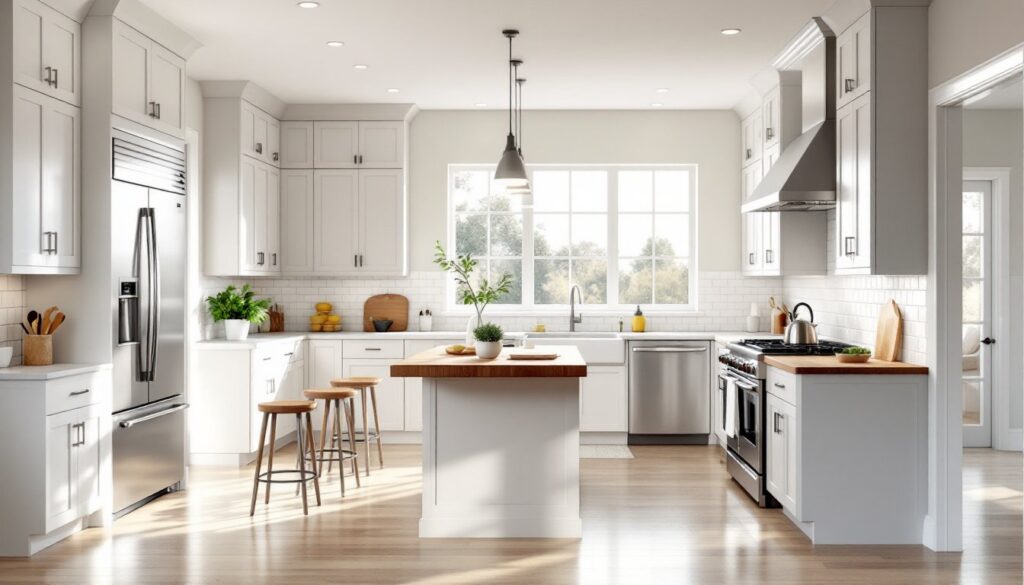
If you’re adding an island, the perimeter layout underneath matters. An L-shaped kitchen with island offers the best of both worlds: plenty of counter on two walls plus a central workspace. Make sure you’ve got at least 36 inches of clearance on all sides of the island for traffic flow: 42–48 inches is better if multiple people cook or you have kids darting through.
Partial walls and half-height partitions are making a comeback. A 42-inch pony wall or a floor-to-ceiling column can hide dirty dishes from the living room without closing off the space entirely. It’s a useful middle ground if you want connection without exposing every stage of dinner prep.
Safety note: open concepts often require a structural beam to carry the load previously supported by the removed wall. This isn’t a DIY demo, hire a structural engineer to spec the beam (typically an LVL or steel I-beam), pull permits, and have inspections signed off. Costs vary wildly by region and span, but expect $2,000–$8,000 for engineering, materials, and installation on a 12–16 foot span.
Small Kitchen Layout Solutions That Work
Small kitchens demand smarter choices, not lower expectations. With careful planning, a galley or single-wall layout in 60–100 square feet can outperform a poorly designed large kitchen.
Vertical storage is non-negotiable. Use the full height between counter and ceiling:
- Upper cabinets to the ceiling (typically 42-inch height instead of 30-inch) add 40% more storage and eliminate dust-collecting soffits
- Open shelving on one wall keeps everyday dishes accessible and makes the room feel larger
- Pegboard or rail systems on the backsplash hold utensils, cutting boards, and frequently used tools
Many homeowners exploring small kitchen ideas underestimate how much a kitchen cabinet design tool can help. Free kitchen design software like SketchUp or manufacturer-provided planners (IKEA, Home Depot, Lowe’s) let you test cabinet configurations and spot clearance issues before spending a dime.
Appliance sizing matters more in tight spaces:
- Swap a 30-inch range for a 24-inch apartment-size range and reclaim 6 inches of counter
- Choose an 18-inch dishwasher (typically 8 place settings) instead of 24 inches
- Use a counter-depth refrigerator (24-inch depth vs. standard 30-inch) to reduce how far it juts into the aisle
- Consider a microwave drawer or over-the-range microwave to free up counter real estate
Single-wall layouts (everything on one wall) are the ultimate small-space solution for studios or ADUs. They work when:
- Total run is 8–12 feet (enough for sink, range, and fridge with minimal counter gaps)
- You add a portable island or cart for extra prep space and storage
- Upper cabinets run the full length to maximize vertical capacity
Small doesn’t mean sacrificing style. Pops of color through decorative cabinet choices or thoughtful wall decor draw the eye upward and add personality without eating floor space.
Choosing the Right Layout for Your Home’s Footprint
Matching layout to footprint means measuring what you’ve actually got, not what the listing claimed or what you wish you had. Grab a 25-foot tape measure and map out:
- Wall-to-wall dimensions at floor level (old houses aren’t square: check at multiple points)
- Door swing clearances (standard interior door needs 32–36 inches of clear swing)
- Window locations and sill heights (affects upper cabinet and backsplash planning)
- Existing plumbing and gas lines (moving a gas range costs $500–$1,200: relocating a sink’s drain stack can hit $1,500+)
Use those measurements to test layouts. A free kitchen design app can speed this up, but graph paper and a pencil work just fine. Use a scale of 1/4 inch = 1 foot and cut out templates for appliances:
- Refrigerator: 36″W × 30″D (add 1″ on hinge side for door clearance)
- Range: 30″W × 26–28″D
- Dishwasher: 24″W × 24″D
- Sink base cabinet: 30–36″W × 24″D
How to design a kitchen layout step-by-step:
- Mark fixed elements (windows, doors, structural posts, radiators)
- Plot the sink location near existing plumbing if possible (saves $500–$2,000)
- Position the range near a gas line or 240V outlet: maintain 12–18 inches of counter on at least one side
- Place the refrigerator on an exterior wall if possible (easier to vent a through-wall ice maker line)
- Fill gaps with base cabinets, maintaining the work triangle: sum of all three legs should be 13–26 feet, with no single leg shorter than 4 feet or longer than 9 feet
- Add upper cabinets, keeping 18 inches of clearance above the counter (24 inches over a range)
If your kitchen layout design puts the sink more than 5 feet from the existing drain stack, expect to pay for new plumbing. If your range is over 6 feet from the existing gas line or 240V circuit, budget for an electrician or plumber.
Permit requirements vary by jurisdiction, but most localities require permits for:
- Moving or adding gas lines
- Adding/relocating 240V circuits
- Any structural changes (removing walls, adding beams)
- Plumbing work beyond a direct sink swap
Skipping permits risks failed inspections when you sell, plus potential insurance claim denials if faulty work causes damage. Contact your local building department or check your municipality’s website for specifics.
A kitchen layout drawing, whether from a kitchen design app free download or hand-sketched, becomes your communication tool with contractors, cabinet suppliers, and inspectors. Include dimensions, appliance specs, and notes on any custom requests. The clearer your plan, the fewer surprises during installation.
Conclusion
A smart kitchen layout isn’t about chasing trends, it’s about matching your home’s bones to how you actually cook and move. Whether you’re working with a galley, an L-shape, or an open-concept island setup, the same rules apply: respect the work triangle, plan for adequate clearances, and measure twice before ordering cabinets. Don’t skip the drawing phase, and don’t hesitate to call in a structural engineer or licensed contractor when walls or major utilities are in play.