Table of Contents
ToggleA bedroom accent wall changes everything. It’s the quickest way to add depth, personality, and visual interest without repainting the entire room or rearranging furniture. Whether you’re looking to highlight your bed wall, create a cozy nook in a small bedroom, or experiment with texture and color, a feature wall delivers impact with minimal material and labor. This guide walks through selecting the right wall, choosing materials that match your skill level, and executing a clean install. No lifestyle fluff, just practical steps for creating a bedroom accent wall that actually works.
Key Takeaways
- An accent wall bedroom project requires minimal material and labor—typically one wall uses about one quart of paint and can be completed in a weekend.
- The best accent wall location is behind the headboard or on a wall you see first when entering, as it creates a natural focal point without competing with doors, windows, or vents.
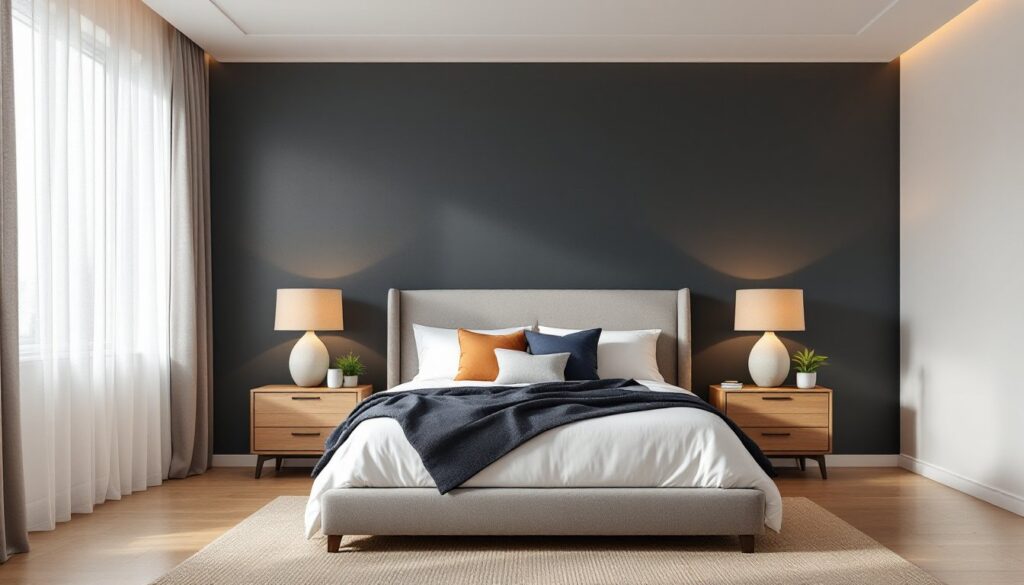
- Paint in matte or eggshell finishes works best for bedrooms, with deep saturated colors like navy, charcoal, and forest green creating impact without harshness.
- Peel-and-stick wallpaper, board-and-batten, shiplap, and 3D panels offer alternatives to paint, each with different skill requirements and aesthetic outcomes.
- Proper wall prep—filling holes, sanding glossy surfaces, cleaning with TSP, and using painter’s tape—is essential for a professional-looking accent wall bedroom that lasts.
- For small bedrooms, treat shorter walls and use lighter tones with a single bold horizontal band to add interest without making the space feel cramped.
What Is an Accent Wall and Why Choose One for Your Bedroom?
An accent wall is a single wall treated differently from the other three in a room, usually through paint, wallpaper, paneling, or texture. In a bedroom, it’s most often the wall behind the headboard, but it can also be a wall with architectural interest like a fireplace, window niche, or angled ceiling line.
The bedroom is ideal for accent walls because it’s a private space where you can test bolder choices without worrying about resale appeal or guest opinions. A living room accent wall often needs to coordinate with multiple furniture zones and sightlines: a bedroom accent wall in a master or small bedroom can afford to be more personal.
From a practical standpoint, accent walls require less material than full-room treatments. One gallon of premium paint covers roughly 350–400 square feet with proper surface prep, meaning a typical 10′ × 8′ wall uses about one quart. Wallpaper, wood paneling, or peel-and-stick products scale similarly. You’re looking at a weekend project, not a week-long renovation.
Accent walls also solve common bedroom layout issues. They anchor the bed visually, define sleeping zones in open-plan lofts, and add dimension to boxy rental bedrooms where structural changes aren’t allowed. If the room lacks architectural detail, no crown molding, wainscoting, or ceiling texture, a feature wall compensates with color or material contrast.
How to Choose the Perfect Wall for Your Bedroom Accent
The best accent wall is the one you see first when entering the room or the wall that frames your primary furniture piece, usually the bed. In most bedroom layouts, that’s the wall behind the headboard. It creates a natural focal point and doesn’t compete with windows, closets, or doorways.
Avoid walls with multiple interruptions. A wall broken up by two windows, a door, and a heating vent creates more cutting, taping, and patching work. Simple geometry saves time and material. If you’re installing board-and-batten or shiplap, every outlet and switch requires notching and precision measuring.
Consider light sources. North-facing walls receive cooler, indirect light and can handle warmer paint tones or darker wood finishes without feeling cave-like. South-facing walls get direct sun most of the day, which can wash out subtle paint sheens or fade certain wallpaper dyes over time. Test paint samples on the actual wall at different times of day before committing to a five-gallon bucket.
In small bedrooms, accent walls work best on shorter walls to avoid overwhelming the space. A 12′ × 10′ bedroom benefits from treating the 10′ wall rather than the 12′ wall, it draws the eye inward instead of elongating an already narrow footprint. For master bedroom accent wall paint ideas, longer walls can support bold patterns or deep jewel tones because the square footage balances the visual weight.
If the room has a sloped ceiling or angled wall (common in attics or A-frames), that’s often your best candidate. The architecture already draws attention: leaning into it with color or texture feels intentional rather than corrective.
Popular Accent Wall Materials and Techniques for Bedrooms
Paint Colors and Patterns That Make an Impact
Paint remains the most accessible bedroom accent wall option. It’s forgiving, reversible, and doesn’t require specialized tools beyond a roller, brush, and painter’s tape.
Deep, saturated colors work well in bedrooms because the room isn’t competing with kitchen backsplashes or living room art. Navy, charcoal, forest green, or terracotta create contrast without feeling harsh. Use a matte or eggshell finish for bedrooms, high-gloss highlights wall imperfections and reflects light in ways that disrupt sleep.
For bedroom accent wall paint ideas that add geometry without wallpaper, try vertical or horizontal stripes using painter’s tape and two coordinating colors. A 6″ stripe pattern on an 8′ wall requires careful layout: measure total wall width, divide by stripe width, and adjust slightly so you don’t end with a 2″ orphan stripe in the corner. Use a laser level to mark lines: eyeballing rarely ends well.
Color blocking, dividing the wall into large asymmetric sections, suits modern or mid-century bedrooms. Tape off shapes, prime if you’re going from dark to light, and apply two coats for even coverage. Remove tape while the final coat is still slightly tacky (about 30–60 minutes after application) to avoid peeling dried paint.
If you’re working in a small bedroom accent wall scenario, lighter tones with a single bold horizontal band at headboard height (roughly 36″–48″ from the floor) adds interest without shrinking the room visually.
Wallpaper, Wood Paneling, and Textured Options
Peel-and-stick wallpaper has improved significantly in the past five years. It’s repositionable, requires no paste, and removes cleanly from most painted drywall. It won’t adhere well to textured or freshly painted walls (wait 30 days after painting before applying). Measure wall height and width, add 2″ to each dimension for wiggle room, and order one extra roll, dye lots vary.
Traditional paste wallpaper offers more pattern and texture variety but demands more skill. You’ll need a wallpaper smoother, seam roller, and utility knife. If the bedroom has high humidity (ensuite bath, poor ventilation), use vinyl-coated or solid vinyl wallpaper to resist mold. Many DIY home decor projects include wallpaper tutorials that cover pattern matching and corner wrapping techniques.
Board-and-batten gives bedrooms a cottage or farmhouse feel. It’s a grid of vertical boards (typically 1×4 or 1×6 pine) with narrow battens (1×2 or 1×3) covering the seams. Attach boards directly to drywall with construction adhesive and 18-gauge brad nails into studs where possible. Use a stud finder and mark stud locations with painter’s tape before starting. Paint everything the same color for a cohesive look, or contrast the boards and battens for definition.
Shiplap and tongue-and-groove paneling add horizontal texture. Real shiplap is ¾” thick with a rabbet joint: many DIYers use ¼” plywood ripped into 6″ planks as a budget alternative. Secure with adhesive and nails, starting from the bottom and working up. Leave a ⅛” gap at floor and ceiling for expansion, baseboards and crown molding hide it. Prefinish boards before install to avoid brush marks in tight seams.
Reclaimed wood or pallet wood projects appear often in bedroom accent wall ideas DIY galleries, but use caution. Pallets may carry chemical treatments (look for HT “heat-treated” stamps, not MB “methyl bromide”). Sand thoroughly, check for hidden nails, and seal with polyurethane to prevent splinters and off-gassing. Many wood accent wall options explore finishes from natural oak to painted white for different aesthetics.
3D wall panels (MDF, PVC, or plant fiber) install with panel adhesive and create shadow lines that shift throughout the day. They’re lightweight, paintable, and hide minor wall imperfections. Panels typically come in 2′ × 2′ squares: plan layout so seams align and partial pieces land in less visible corners.
Fabric or upholstered panels work for renters or anyone avoiding permanent changes. Wrap foam-core boards or ½” plywood in fabric, then mount with Command strips or French cleats. This approach also improves bedroom acoustics slightly by absorbing sound.
Step-by-Step Guide to Creating Your Bedroom Accent Wall
1. Prep the wall. Remove outlet covers, picture hooks, and switch plates. Fill nail holes and dents with lightweight spackling compound, let dry 1–2 hours, then sand smooth with 120-grit sandpaper. Wipe dust with a tack cloth or damp rag. If the existing paint is glossy, scuff-sand the entire wall with 220-grit to help new paint adhere.
2. Clean and prime (if needed). Wash the wall with a TSP substitute or mild detergent to remove oils and dirt, this step matters more than most DIYers think. If you’re painting over dark color with light, or covering stains, use a stain-blocking primer like BIN or Kilz. Skip primer if you’re applying similar sheen and color depth: modern paint-and-primer combos work fine on previously painted drywall in good condition.
3. Tape off edges. Use 14-day painter’s tape (not masking tape) along ceiling, baseboards, and adjacent walls. Press the tape edge firmly with a putty knife or credit card to seal, paint bleeds happen at loose tape edges. For crisp lines on textured walls, run a thin bead of paintable caulk along the tape edge, smooth with a wet finger, and let dry before painting.
4. Cut in, then roll. Use a 2″–3″ angled brush to “cut in” paint along all taped edges, around outlets, and in corners. Work in 3–4 foot sections. Then roll the field with a ⅜” nap roller for smooth walls or ½” nap for light texture. Roll in overlapping W-patterns to avoid visible lines. Two coats are standard: wait 2–4 hours between coats (check the paint can for recoat time).
5. Install non-paint materials. For wallpaper, start at the least visible corner and work toward the door. Match patterns at eye level (roughly 60″ from the floor) where misalignment is most noticeable. For paneling or boards, snap a level chalk line for your first piece, if the first board is off, every subsequent piece compounds the error. Secure wood to studs where possible: use construction adhesive on drywall between studs.
6. Finish edges and hardware. Caulk gaps between paneling and trim with paintable acrylic caulk. Reinstall outlet covers and switch plates. If you’ve added thickness with paneling, you may need box extenders to bring outlets flush with the new surface, this is a safety requirement per NEC code to prevent arcing and fire hazard. They’re inexpensive plastic rings that snap into existing boxes.
Safety notes: Wear safety glasses when cutting wood or using power tools. Use a dust mask (N95 or better) when sanding, especially MDF or older painted surfaces that may contain lead. Keep the room ventilated when using adhesives or oil-based primers. If you’re unsure whether your bedroom wall is load-bearing (unlikely for interior partition walls, but possible), consult a structural engineer before removing drywall or making cuts, this is not a DIY guess.
For budget-conscious projects, many DIY furniture and room makeovers demonstrate how leftover materials and strategic paint choices keep costs under $100 for a typical bedroom accent wall.
Conclusion
A bedroom accent wall is one of the highest-impact, lowest-cost changes a homeowner can make. It defines the room, anchors furniture, and lets you test design ideas without committing an entire house. Whether you’re painting a bold color, installing shiplap, or applying peel-and-stick wallpaper, the key is solid prep, accurate measuring, and patience with the details. Take your time on layout and finishing work, it’s the difference between a feature wall and a DIY project that looks like one.