Table of Contents
ToggleShopping for a new washer and dryer can feel overwhelming when you’re staring at dozens of models, capacity ratings, and feature lists. Home Depot simplifies the process with a massive selection, competitive pricing, and services that go beyond the showroom floor. Whether you’re replacing a 15-year-old top-loader or outfitting a new home, understanding what’s available, and how to choose the right setup for your space, saves time, money, and future headaches. This guide walks through everything from selecting the right machine type to prepping your laundry room for delivery day.
Key Takeaways
- Home Depot’s washer and dryer selection includes major brands with delivery, haul-away, and installation services that make purchasing and setup convenient for any household.
- Front-load washers use 40–50% less water and spin faster than traditional top-loaders, while impeller top-loaders offer gentler washing with the ability to add forgotten items mid-cycle.
- Stackable washer and dryer units maximize small spaces by stacking full-size models vertically, though combo units limit capacity to 2.3–2.5 cubic feet, making them ideal for singles or couples only.
- Proper measurement of your laundry room space, doorways, and utility connections—especially 240V for electric dryers or gas line access—prevents costly delivery delays and installation complications.
- ENERGY STAR-certified washers save $45–$60 annually, while heat pump dryers cut energy use by up to 50% despite higher upfront costs that typically pay back in 5–7 years for frequent users.
- Cleaning the dryer lint trap after every load is critical for safety and efficiency, preventing the 15,000 home fires annually linked to clogged dryer vents according to the U.S. Fire Administration.
Why Choose Home Depot for Your Washer and Dryer Purchase
Home Depot stocks washer and dryer sets from major manufacturers like Whirlpool, LG, Samsung, GE, and Maytag, offering a range that covers budget-friendly builds to premium smart models. Their buying power translates to regular promotions, home depot washer and dryer clearance events typically run during major holidays (Memorial Day, Labor Day, Black Friday) and model changeover periods in late winter.
Beyond inventory, Home Depot provides delivery coordination, haul-away services for old units, and installation packages that handle hookups for gas or electric dryers. Most stores let you view floor models in person, which matters when you’re comparing door swing directions, control panel layouts, and drum capacity. You’re not stuck ordering blind.
Their extended protection plans cover mechanical breakdowns beyond manufacturer warranties, useful for households that run heavy laundry loads. The return policy allows 48 hours for unopened major appliances and up to 30 days for defective units, though restocking fees apply if you simply change your mind after delivery.
Online ordering integrates with local inventory, so you can check stock at nearby stores before committing. For rural buyers or those far from metro areas, Home Depot’s nationwide distribution network usually beats smaller regional appliance chains on delivery speed.
Top Washer and Dryer Options Available at Home Depot
Home depot washer and dryer sets fall into several categories based on load type, capacity, and installation footprint. Matching your household’s laundry volume and space constraints to the right configuration prevents buyer’s remorse.
Front-Load vs. Top-Load: Which Is Right for Your Home?
Front-load washers use a horizontal drum and gravity-assisted tumbling, which typically consumes 40–50% less water than comparable top-loaders. They spin faster (often 1,200–1,400 RPM), extracting more moisture before clothes hit the dryer, which shortens dry time and cuts energy use. The tradeoff: you’ll need to leave the door ajar after each cycle to prevent mildew buildup on the door gasket, and bending to load/unload can strain your back if you skip a pedestal riser.
Top-load washers come in two flavors. Traditional agitator models use a central post to churn clothes and handle heavily soiled work gear well, but they’re rougher on fabrics and use more water. Impeller (high-efficiency) top-loaders replace the agitator with a low-profile cone, offering gentler washing and larger usable capacity in the same exterior footprint. They still let you toss in a forgotten sock mid-cycle, something front-loaders lock you out of once started.
For dryers, electric models require a 240V outlet (NEMA 14-30 or 10-30 plug) and cost less upfront. Gas dryers need a ½-inch gas supply line and 120V outlet but cost roughly $0.15 less per load to operate in most regions. If your laundry room already has gas stubbed in, the payback period is usually under three years for families running five-plus loads per week. When comparing options, many homeowners turn to trusted home maintenance checklists to ensure their utility connections meet current codes.
Stackable and All-in-One Models for Small Spaces
Condos, apartments, and homes with tight laundry closets benefit from stackable washer dryer home depot units or all-in-one combos. Stackable pairs are simply full-size or compact front-loaders designed to mount vertically using a stacking kit (sold separately, around $50–$100). You’ll need 75–80 inches of vertical clearance and a sturdy floor, these stacked units weigh 300+ pounds combined.
Washer dryer combo units (also called all-in-ones) house both functions in a single 24-inch-wide cabinet. They’re ventless, using condensation drying, which makes installation flexible but extends dry cycles to 2–3 hours. Capacity tops out around 2.3–2.5 cubic feet, fine for singles or couples but limiting for families. Stackable washer and dryer reviews highlight models that balance footprint with cycle performance.
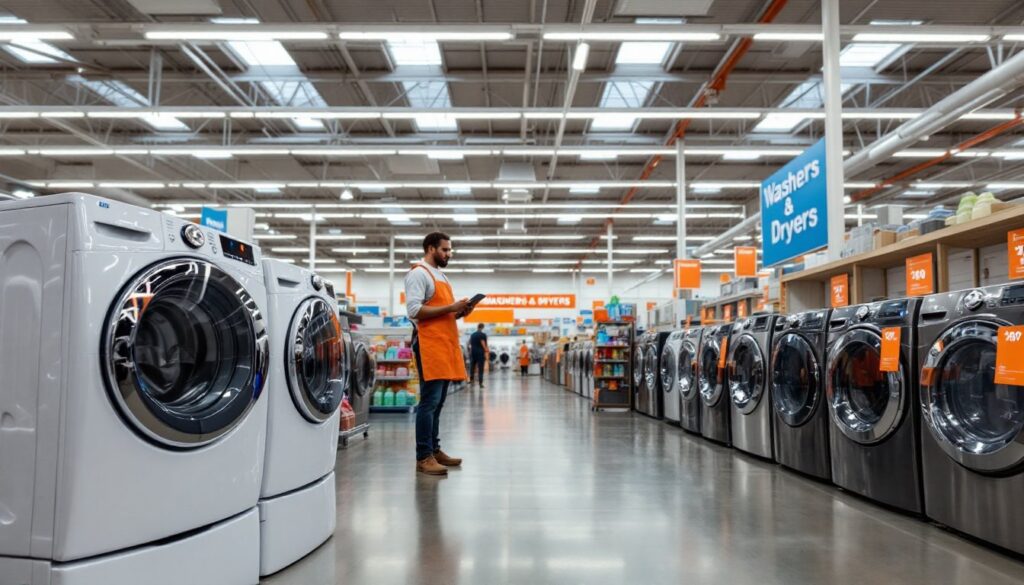
Home Depot’s in-store displays often include compact 24-inch and 27-inch stackable sets alongside standard 27-inch and 29-inch models, so bring your measurements and compare door clearances in person.
How to Measure Your Space and Prepare for Delivery
Measure twice, order once. Start with the installation footprint: standard washers and dryers are 27–29 inches wide, 30–34 inches deep (add 4–6 inches for hoses and venting), and 38–43 inches tall. Closet installations need at least 1 inch of clearance on each side for airflow and vibration, plus 4 inches behind the units for connections.
Check door and hallway dimensions from your entry point to the laundry room. Most delivery crews won’t navigate turns tighter than 32 inches or carry units up more than one flight of stairs without a fee. Remove closet doors or unhinge entry doors if needed, it’s easier than paying for a return and reorder.
Verify your electrical and plumbing hookups. Washers need a ¾-inch cold water supply (hot optional, though most modern machines heat internally), a standpipe drain (minimum 18 inches tall), and a standard 120V outlet. Dryers require that 240V circuit for electric or a black-iron gas line for gas models. If your existing dryer is electric and you’re switching to gas, hire a licensed plumber to run the line and a certified electrician to install the 120V outlet, this isn’t a DIY job unless you hold both licenses.
Venting requirements for dryers: rigid metal duct (4-inch diameter) is code in most jurisdictions. Flexible foil or plastic duct is a fire hazard and fails inspection. Keep total duct length under 25 feet with no more than two 90-degree elbows: every elbow subtracts roughly 5 feet from maximum allowable length. Ventless dryers (condensation or heat pump) skip the duct entirely but must drain condensate via the standpipe or a floor drain.
Schedule delivery for a time when you’re home. Crews typically call 30 minutes out. Clear the installation path, remove old units if you’re not paying for haul-away, and have a shop vacuum ready, decades-old machines often leave dust bunnies and lost socks behind.
Installation Services and DIY Considerations
Home Depot offers basic installation (around $120–$150 for both units) that includes leveling, hookup of existing water/drain/power or gas lines, and a test cycle. It doesn’t cover running new electrical circuits, extending gas lines, or moving plumbing. If your laundry room needs those upgrades, you’ll pay extra or hire outside contractors.
DIY installation is straightforward if your hookups are already in place. You’ll need an adjustable wrench, a level (4-foot recommended), and possibly a dolly. Washers ship with transit bolts threaded into the drum to prevent damage during shipping, remove all bolts before powering on, or you’ll destroy the suspension on the first spin cycle. The manual shows their locations (usually three or four bolts on the rear panel).
Level the washer front-to-back and side-to-side by adjusting the threaded feet: an out-of-level machine will walk across the floor during spin and wear out bearings prematurely. Use a torpedo level on top of the washer, run a short spin cycle, and re-check. For dryers, leveling is less critical but still recommended.
Gas dryer hookup requires a flexible gas connector (typically ⅜-inch or ½-inch) rated for appliances, two pipe wrenches, and pipe thread sealant or Teflon tape. After connecting, perform a leak test using soapy water on every joint while the gas valve is open, bubbles indicate a leak. If you’re not comfortable with gas work, this is the moment to call a pro. Most jurisdictions require a permit and inspection for new gas line runs.
Electric dryers use a heavy-duty cord (10/3 or 12/3 gauge depending on outlet type). Match the plug configuration (three-prong or four-prong) to your wall outlet. Modern NEC code requires four-prong (ground, two hots, neutral), but older homes may have three-prong outlets, which are grandfathered in unless you rewire.
Ventless dryers simplify installation, no ductwork, just a drain connection and power. They take longer per cycle but eliminate venting headaches in condos or interior rooms.
Maximizing Energy Efficiency and Long-Term Savings
ENERGY STAR–certified washers use roughly 25% less energy and 33% less water than standard models, translating to $45–$60 per year in savings for an average household. Front-loaders dominate this category due to their lower water use, but some high-efficiency top-loaders qualify as well. Check the yellow EnergyGuide label on the showroom model for estimated annual operating cost, it’s based on 8 loads per week at national average utility rates.
Heat pump dryers (a subset of ventless models) recycle hot air instead of venting it outside, cutting energy use by up to 50% compared to conventional electric dryers. They cost $1,000–$1,400, roughly double a standard electric dryer, but the payback period is 5–7 years for households running 6+ loads weekly. They’re quieter and gentler on fabrics but take 1.5–2x longer per cycle.
Washing in cold water with modern detergents (formulated for cold-water enzymes) preserves colors, prevents shrinkage, and saves the energy your water heater would burn. Most soil and stains come out fine in cold unless you’re dealing with grease or sanitizing bedding.
Clean the lint trap after every dryer load, this isn’t optional. A clogged trap extends dry time by 20–30 minutes and accounts for roughly 15,000 home fires annually according to the U.S. Fire Administration. Every six months, vacuum out the lint trap housing and inspect the exterior vent hood for blockages (bird nests, dryer sheet buildup).
Run full loads whenever possible. Washers and dryers are most efficient at or near rated capacity. Half-loads in a full-size machine waste water and energy. If you routinely wash small loads, consider a compact model or a washer with a load-sensing feature that adjusts water level automatically.
Use moisture sensors instead of timed dry cycles. Most mid-range and up dryers include sensors that detect when clothes are dry and shut off automatically, preventing over-drying and the energy waste that comes with it. Over-drying also degrades fabrics faster, shortening the lifespan of your towels, sheets, and work clothes.
Finally, consider off-peak electricity hours if your utility offers time-of-use rates. Running the dryer after 8 PM or before 6 AM can cut per-load costs by 30–40% in some markets. Many newer washers and dryers include delay-start timers to automate this.