Table of Contents
ToggleVintage living rooms never go out of style, they just get better with age. Whether you’re drawn to the warm tones of mid-century modern or the ornate details of antique furnishings, creating a vintage living room means blending character with comfort. It’s not about turning your home into a museum: it’s about layering history, texture, and personality into a space that feels both collected and cohesive. The good news? You don’t need a trust fund or endless weekends at estate sales to pull it off. With some strategic shopping, a little elbow grease, and a clear vision, anyone can create a vintage living room that looks like it’s been curated over decades.
Key Takeaways
- Vintage living room designs blend character with comfort by mixing 60–70% authentic vintage elements with modern anchors like sleek coffee tables or minimalist shelving for a balanced, collected aesthetic.
- Choose a color palette based on your design era: warm mid-century tones (burnt orange, mustard), moody antique hues (burgundy, forest green), or bold 1970s palettes (avocado, goldenrod) paired with neutral complementary shades.
- Source authentic vintage furniture from estate sales, thrift stores, and online marketplaces while evaluating pieces for solid wood construction, dovetail joints, and maker’s marks; quality reproductions can fill budget gaps when needed.
- Layer textures through velvet upholstery, hand-knotted area rugs, chunky knit throws, and mixed wood finishes to create a tactile, lived-in space that feels genuinely curated over time.
- Incorporate period-appropriate lighting with overhead fixtures like Sputnik chandeliers or pendant lights, and add task lighting through tripod floor lamps and ceramic table lamps with warm white LED bulbs for ambiance.
- Balance vintage charm with modern comfort by using contemporary seating anchors, built-in storage, wall-mounted TVs hidden in credenzas, and energy-efficient window treatments that maintain authentic character.
What Defines a Vintage Living Room Style?
A vintage living room pulls from design eras roughly spanning the 1920s through the 1980s. The key is authenticity, or at least the appearance of it. True vintage pieces are at least 20–30 years old, while antiques are typically 100+ years. But the style isn’t about rigid timelines: it’s about capturing the aesthetic sensibility of a particular period.
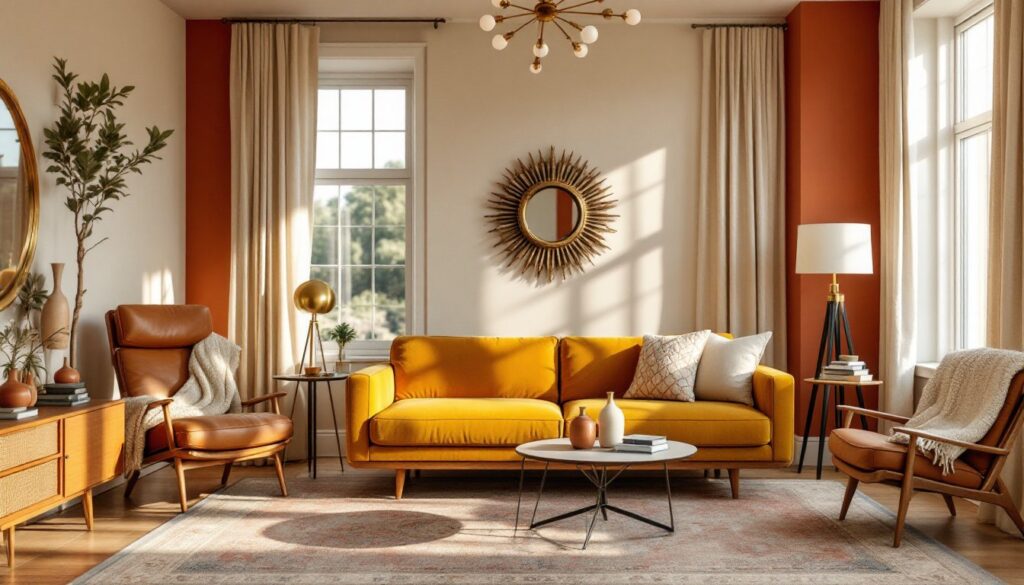
Mid-century modern living room designs from the 1950s–60s emphasize clean lines, organic forms, and functional simplicity. Think tapered legs on sofas, teak credenzas, and low-profile furniture. A modern mid century living room often softens these elements with warmer textiles and layered lighting to avoid the stark, showroom feel.
Antique living room ideas lean into pre-1920s influences, Victorian carved wood, claw-foot furniture, heavy drapes, and ornate mirrors. These spaces feel formal and collected, with an emphasis on craftsmanship and detail.
The modern vintage living room is a hybrid approach, blending vintage furniture and decor with contemporary comforts like sectional seating, updated lighting, and neutral backdrops. It’s about balance: too much vintage feels like a time capsule, too little and you lose the charm. Aim for 60–70% vintage elements mixed with modern anchors like a sleek coffee table or minimalist shelving.
Choosing the Perfect Color Palette for Vintage Charm
Color sets the mood faster than any furniture choice. Vintage palettes vary by era, so pick your lane before you crack open the paint cans.
For a warm mid century modern living room, lean into earthy tones: burnt orange, mustard yellow, olive green, and rich walnut browns. These hues pair beautifully with natural wood tones and brass accents. Walls in soft cream or beige let furniture take center stage, while an accent wall in deep terracotta or sage adds dimension without overwhelming.
Antique-inspired spaces often feature deeper, moodier colors, burgundy, forest green, navy, and chocolate brown. Pair these with creamy whites or soft grays on trim and molding to highlight architectural details. If your walls are painted in bold hues, balance them with lighter upholstery and area rugs.
Vintage living room decor from the 1970s can embrace bolder, more saturated palettes, think avocado, goldenrod, and harvest orange. These work best in spaces with good natural light and when tempered with plenty of wood and neutral textiles.
Paint finishes matter, too. Flat or matte paints read more period-appropriate than high-gloss sheens, especially on walls. If you’re working with original plaster or wood paneling, consider restoring rather than painting over, authenticity adds value, both aesthetic and resale.
Furniture Selection: Finding Authentic and Reproduction Pieces
Sourcing vintage furniture takes patience, but it’s worth the hunt. Start with estate sales, thrift stores, and online marketplaces like Facebook Marketplace, Craigslist, and Chairish. Auctions, both local and online, can yield high-quality pieces at reasonable prices if you’re willing to do your assignments.
When evaluating a piece, check for solid wood construction, dovetail joints in drawers, and original hardware. Veneer isn’t a dealbreaker, many mid-century pieces use it, but avoid particle board or laminate unless it’s a temporary placeholder. Look underneath and behind furniture for maker’s marks, stamps, or labels. Names like Lane, Broyhill Brasilia, Heywood-Wakefield, and Drexel are reliable mid-century makers.
Reproduction furniture can fill gaps when authentic pieces are out of budget or hard to find. Quality reproductions use solid hardwoods and period-appropriate joinery. Article, West Elm, and Joybird offer modern vintage living room-friendly lines that mimic mid-century silhouettes without the markup of true vintage.
Don’t be afraid of pieces that need work. A structurally sound sofa with tired upholstery is a candidate for reupholstering, just factor in the cost (typically $600–$1,500 depending on size and fabric). Scratched wood furniture can be refinished with fine-grit sandpaper (220-grit), wood stain, and polyurethane topcoat. Wear a respirator mask and work in a well-ventilated space when using stains or sealers.
Mix heights and scales. Pair a low-slung mid-century sofa with a taller bookshelf or a substantial armchair. This prevents the room from feeling flat or monotonous.
Layering Textures and Fabrics for Vintage Appeal
Vintage spaces thrive on tactile variety. Smooth leather, nubby wool, soft velvet, and worn wood all contribute to a room that feels lived-in and layered.
Start with upholstery. Velvet and tweed are classic mid-century choices, while brocade and damask suit more ornate, antique-inspired rooms. If you’re reupholstering, choose fabrics with a 25,000+ double-rub count for durability on high-use pieces like sofas and armchairs.
Area rugs anchor the space and add warmth underfoot. Vintage Persian, Turkish, or Moroccan rugs bring pattern and color: look for hand-knotted wool rugs with natural dyes. An 8’x10′ rug works for most living rooms, extending at least 6–12 inches beyond the front legs of your sofa and chairs. Rug pads are non-negotiable, they prevent slipping and extend rug life.
Layering textiles adds depth. Drape a chunky knit throw over the arm of a leather sofa, stack patterned and solid throw pillows (mix 18″x18″ and 20″x20″ sizes), and consider curtains in linen or cotton blends. Vintage-style curtains should puddle slightly on the floor for a more relaxed, collected look. Hang rods 4–6 inches above the window frame and extend them 6–8 inches beyond each side to make windows appear larger.
Wood finishes also count as texture. Mix walnut, teak, oak, and pine rather than matching everything. The variation makes the space feel curated over time, not bought in a single shopping trip.
Incorporating Vintage Lighting and Accessories
Lighting makes or breaks a vintage living room. Overhead fixtures should feel intentional, swap builder-grade ceiling lights for period-appropriate chandeliers, pendant lights, or flush mounts. Mid-century options include Sputnik chandeliers, globe pendants, and atomic-style fixtures in brass or brushed nickel. Antique spaces benefit from crystal chandeliers or wrought iron fixtures with Edison bulbs.
Task and ambient lighting layer the space. Floor lamps with tripod bases or arc designs are iconic mid-century choices. Table lamps with ceramic or turned wood bases add warmth on side tables and credenzas. Use warm white LED bulbs (2700K–3000K) to mimic the glow of incandescent bulbs without the heat or energy waste. Dimmer switches (often a simple DIY swap if you’re comfortable working with electrical boxes, turn off the breaker first) let you adjust mood and intensity.
Accessories bring personality without major investment. Vintage mirrors, especially those with ornate frames or sunburst designs, reflect light and make rooms feel larger. Hang them opposite windows for maximum effect. Original artwork, vintage posters, and framed botanical prints add visual interest: thrift stores and estate sales are goldmines for affordable art.
Barware and display pieces like decanters, ceramic vases, and brass candlesticks add finishing touches. Group items in odd numbers (3 or 5) for a more dynamic arrangement. Bookshelves should feel curated but not cluttered, mix books with small objects, plants, and framed photos. Leave some negative space: overcrowding kills the vibe.
Vintage clocks, radios, and record players (bonus if they’re functional) double as decor and conversation starters. Check that electronics are safely rewired if you plan to plug them in, old wiring can be a fire hazard.
Blending Vintage Elements with Modern Comfort
Vintage aesthetics shouldn’t mean sacrificing comfort or function. The trick is balancing period charm with contemporary livability.
Start with seating. Vintage sofas often have firmer cushions and shallower seats than modern designs. If a piece is beautiful but uncomfortable, add a lumbar pillow or a memory foam topper wrapped in vintage fabric. Alternatively, use a modern sectional in a neutral tone as your anchor and layer in vintage chairs, side tables, and decor around it.
Storage is another area where modern solutions help. Mid-century credenzas and sideboards offer storage while maintaining style, but if you need more, consider built-in shelving or sleek, low-profile cabinets that don’t compete with vintage focal points. Concealed storage, like ottomans with lift tops, keeps clutter out of sight.
Technology integration requires thought. Wall-mount your TV or place it in a vintage credenza with cutouts for cable management (a jigsaw and a 1″–2″ hole saw make quick work of this if you’re handy, wear safety goggles). Hide speakers, routers, and charging cables behind furniture or inside decorative boxes.
Modern vintage living room ideas often include updated window treatments for energy efficiency. Cellular shades or thermal-backed curtains reduce heating and cooling costs while maintaining the aesthetic. If you’re in an older home, consider adding weatherstripping around windows and doors, it’s a simple fix that makes a noticeable difference.
Flooring upgrades can modernize a space without losing character. If you’re working with worn hardwood, refinishing involves sanding (use a drum sander for large areas, an edge sander for perimeters, rent both from home centers), staining, and applying polyurethane. This is a messy, multi-day project requiring dust masks and good ventilation, but the payoff is huge. If original floors are beyond saving, engineered hardwood or luxury vinyl plank in wood-look finishes offer durability and period-appropriate appearance.
Conclusion
Creating a vintage living room isn’t about perfection, it’s about intention. Every piece should earn its place, whether it’s a mid-century credenza that took three months to find or a reproduction lamp that ties the room together. Take your time sourcing, don’t rush the process, and remember that the best vintage spaces feel personal, not styled. Start with one anchor piece, build around it, and let the room evolve.