Table of Contents
ToggleGrey has become one of the most versatile and forgiving colors in interior design, and for good reason. It’s neutral enough to pair with nearly any accent color, hides everyday wear better than white, and creates a sophisticated backdrop that doesn’t scream for attention. Whether you’re working with a dark, north-facing room that needs brightening or a sun-drenched space where warm whites feel too stark, grey offers flexibility that few other neutrals can match. This guide walks through practical ways to design a grey living room that feels intentional, layered, and lived-in, not flat or cold.
Key Takeaways
- Grey living room ideas succeed by layering tone, texture, and color contrast rather than relying on paint color alone, creating a sophisticated and lived-in space.
- Choose warm-undertone greys (like greige) for rooms with limited natural light and cool greys for modern spaces with abundant sunlight to ensure the shade complements your lighting conditions.
- Apply the 60-30-10 color rule: 60% grey for walls and large furniture, 30% for secondary neutral tones, and 10% for bold accents like pillows or artwork to maintain visual balance.
- Incorporate texture through area rugs, mixed upholstery fabrics, and wall finishes like limewash to prevent your grey living room from feeling flat and one-dimensional.
- Use contrasting furniture and accent pieces—such as tan leather sofas, mustard velvet chairs, or sage green plants—to inject personality and prevent the space from looking sterile.
- Layer multiple light sources at different heights (overhead, task, and accent lighting) since grey absorbs light and needs illumination from various angles to feel warm and inviting.
Why Grey Is the Perfect Foundation for Your Living Room
Grey functions as a true neutral, meaning it doesn’t carry the warmth of beige or the clinical edge of pure white. That makes it an ideal backdrop for layering color, texture, and contrast without overwhelming the space.
From a practical standpoint, grey hides scuffs, pet hair, and dust better than lighter neutrals. Mid-tone greys in particular conceal wear on upholstery and painted trim, which is why they’re popular in high-traffic areas. If you’ve got kids, dogs, or just don’t want to repaint every few years, grey delivers.
Grey also adapts to lighting changes throughout the day. A well-chosen grey can look soft and warm in morning light, then shift to cooler and more formal in the evening. That flexibility makes it easier to live with than colors that only work in one type of light.
Finally, grey plays well with both modern and traditional furniture styles. A charcoal accent wall works behind a mid-century sofa just as well as it does with a tufted Chesterfield. You’re not locked into one aesthetic, which matters if your taste evolves or you’re working with hand-me-down furniture.
Choosing the Right Shade of Grey for Your Space
Not all greys are created equal. The difference between a grey that feels cozy and one that reads as cold often comes down to undertones and how they interact with your room’s natural light.
Before committing to a paint color, test samples on at least two walls, one that gets direct sunlight and one that stays in shadow. Greys can look completely different depending on exposure. A grey with blue undertones might feel crisp and modern in bright light but turn icy and uninviting in a north-facing room.
Another factor: square footage. In smaller living rooms (under 200 square feet), lighter greys with warm undertones help the space feel open without disappearing into blandness. In larger rooms, you’ve got more freedom to go darker or cooler without the space feeling cramped.
Warm vs. Cool Grey Tones
Warm greys contain hints of beige, taupe, or greige (grey + beige). These shades work well in rooms with limited natural light or where you want a more inviting, cosy grey living room feel. They pair naturally with wood tones, brass hardware, and earth-toned textiles.
Cool greys lean blue, green, or violet. They’re sharper and more contemporary, which makes them a good fit for modern or minimalist spaces with plenty of natural light. Cool greys pair well with chrome, glass, and high-contrast black-and-white schemes.
If you’re unsure which direction to go, start with a greige in the mid-tone range (LRV between 40–60). It’s forgiving in most lighting conditions and easier to accessorize than a true cool grey. Popular mid-tone greiges include Sherwin-Williams Agreeable Gray (LRV 60) and Benjamin Moore Revere Pewter (LRV 55.51), both of which have enough warmth to avoid feeling sterile.
Grey Color Combinations That Create Visual Impact
Grey works as a foundation, but it needs contrast and color to feel alive. Here are combinations that deliver visual interest without clashing.
Grey + White: Classic and clean. Use white trim, crown molding, and baseboards to frame grey walls. This combo works especially well in traditional homes with architectural detail. Keep the grey in the mid-to-dark range (LRV 30–50) so the white pops.
Grey + Navy or Charcoal: A monochromatic approach that layers dark and light values of cool tones. Pair light grey walls with a navy sofa and charcoal throw pillows. This palette feels sophisticated and works in both modern and transitional spaces. Avoid going too matchy, vary the shades by at least 20 LRV points.
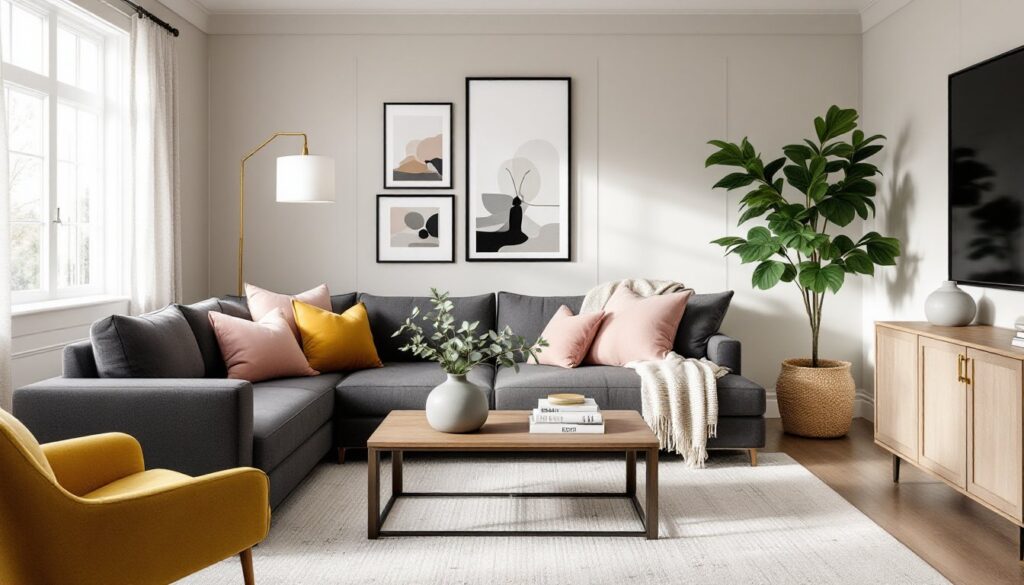
Grey + Blush or Terracotta: Warm accent colors soften grey and add approachability. Blush pink works in contemporary settings, while terracotta brings an earthy, southwestern vibe. Use these in textiles, artwork, or a single accent wall. Keep the grey neutral (greige-leaning) so the warm tones don’t clash.
Grey + Mustard or Brass: For grey living room decor ideas that lean bold, mustard yellow or brass accents provide a jolt of energy. This combo works best with cooler greys (blue- or green-undertoned) to create contrast. Use mustard in pillows, throws, or a statement chair. Brass works in lighting fixtures, picture frames, and hardware.
Grey + Green: Sage, olive, or eucalyptus greens bring an organic feel and work across a range of grey tones. This combination has gained traction in 2025–2026 as modern design trends lean toward biophilic interiors. Use green in large potted plants, upholstery, or cabinetry if your living room includes built-ins.
When layering color, follow the 60-30-10 rule: 60% grey (walls, large furniture), 30% a secondary neutral or muted color (curtains, rugs), and 10% a bold accent (pillows, art, small decor).
Layering Textures to Add Depth to Grey Interiors
Texture is what separates a flat grey living room from one that feels intentional and inviting. Without it, even the best paint color can look one-dimensional.
Start with your largest surfaces. A textured area rug, wool, jute, or a low-pile with a subtle pattern, grounds the space and adds warmth underfoot. In a grey living room, a rug in cream, ivory, or a muted geometric pattern provides contrast without competing with the walls.
Upholstery is the next layer. Mix materials: a linen sofa, velvet throw pillows, and a leather ottoman create visual variety. If your sofa is grey, vary the fabric weight and finish. A slubby linen reads casual: a tight weave or performance fabric feels more formal.
Window treatments also contribute to texture. Linen or cotton curtains in a natural weave soften hard edges and filter light without blocking it entirely. Avoid heavy, formal drapes unless your home’s architecture calls for it, most modern and transitional spaces benefit from a lighter touch.
Wall texture matters too. If you’re open to a bit of extra work, consider a limewash or textured paint finish instead of flat latex. Limewash has a chalky, slightly mottled appearance that adds depth and hides imperfections. It’s applied with a brush or trowel and works especially well in older homes or spaces where you want a less-than-perfect, lived-in look.
Finally, don’t overlook smaller textural elements: a chunky knit throw, a ceramic vase with a matte glaze, or woven baskets for storage. These small details compound and make the space feel curated rather than staged. For spaces embracing darker palettes, layering lighter textures prevents the room from feeling heavy.
Furniture and Accent Pieces for Grey Living Rooms
Furniture selection can make or break grey living room decor ideas. Because grey is neutral, your furniture needs to do some of the heavy lifting in terms of style and personality.
Sofas and Seating: If your walls are grey, consider a sofa in a contrasting color or material. A tan leather sofa warms up cool grey walls, while a navy or charcoal fabric sofa creates a tonal, monochromatic look. If you’re going grey-on-grey, vary the shade by at least two steps (e.g., light grey walls with a charcoal sofa).
For smaller spaces, a grey sectional in a medium tone provides flexibility without dominating the room. Look for modular pieces that can be reconfigured as needed. Avoid overstuffed, oversized sectionals in small rooms, they eat up visual space and make maneuvering difficult.
Coffee Tables and Side Tables: Wood tones add warmth and break up the monotony of grey. Walnut, oak, or reclaimed wood all work well. If you prefer metal, go with brass or matte black rather than chrome, which can feel cold against grey. Glass-top tables work if you want to keep sightlines open, but they require constant cleaning and show fingerprints easily.
Accent Chairs: This is where you can inject color or pattern. A mustard velvet chair, a blush linen wingback, or a black-and-white striped accent chair all work as focal points against grey walls. Just keep scale in mind, oversized chairs overwhelm small rooms.
Lighting: Grey absorbs light, so layered lighting is essential. Combine overhead lighting (recessed cans or a central fixture), task lighting (table or floor lamps), and accent lighting (sconces or picture lights). Aim for a mix of light sources at different heights to avoid a flat, one-note feel.
Brass and matte black fixtures both work well in grey spaces. Brass warms up cool greys: black adds contrast and definition. Avoid mixing too many metal finishes in one room, stick to two max.
Artwork and Wall Decor: Grey walls are a blank canvas, but that doesn’t mean they should stay empty. Oversized art, gallery walls, or a single statement piece all work. If you’re going for gray living room decor ideas that lean modern, consider abstract pieces or black-and-white photography. For a more traditional or eclectic look, mix frame styles and sizes.
Mirrors are also useful in grey rooms, especially those with limited natural light. A large mirror opposite a window reflects light and makes the space feel larger. Avoid tiny, decorative mirrors, go big or skip it.
Storage and Built-Ins: If you’re tackling a more involved project, built-in shelving painted the same grey as the walls creates a seamless, custom look. Use the shelves to display books, plants, and decorative objects in contrasting colors. Open shelving works if you’re organized: closed cabinetry is more forgiving if you’re not.
For quick storage solutions, use woven baskets, ottomans with hidden compartments, or a media console with drawers. Grey living rooms benefit from clean lines and minimal clutter, so storage that doubles as decor is a win. Resources like homify offer plenty of visual inspiration for integrating functional storage into grey interiors.
Conclusion
Grey living rooms succeed when they layer tone, texture, and contrast rather than relying on paint alone. Start with the right shade for your lighting, add color in deliberate doses, and use texture to keep the space from feeling flat. Whether you’re repainting a single wall or furnishing from scratch, grey gives you the flexibility to build a room that adapts as your style evolves, just don’t skip the details that make it feel finished.